

 CLICK TO CALL
Kingston Dental Blog
Why Might Dental Implants Be Planned Differently for One Tooth vs. Multiple Missing Teeth?
November 6, 2026 / Dental Implants
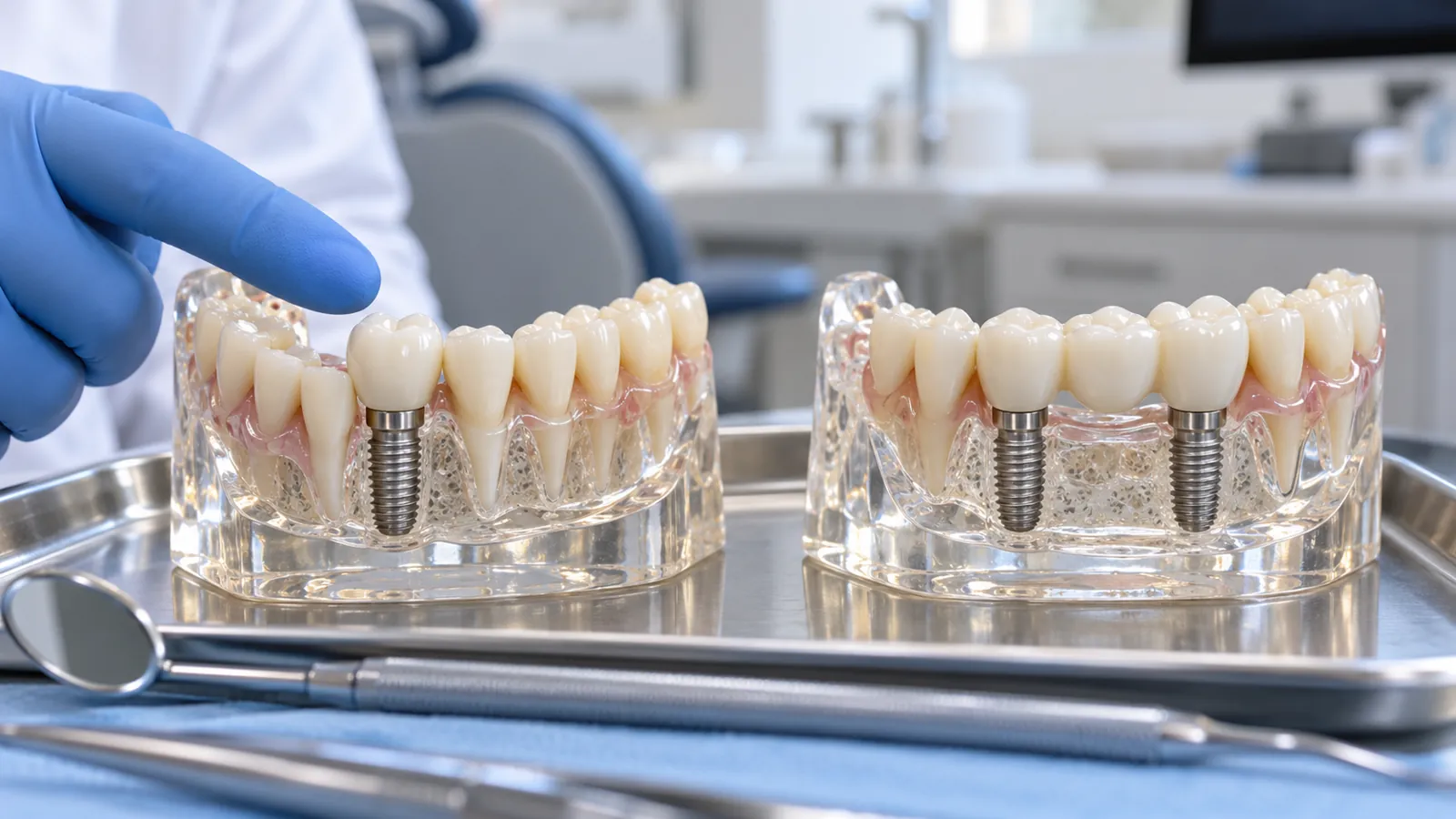
Dental implants are planned around the teeth they need to support, not simply the number of gaps in your smile. Replacing one missing tooth presents a different problem from replacing several neighbouring teeth or teeth missing in separate parts of the mouth. The proposed restoration, the available bone, your bite and the health of surrounding tissues all help shape the plan.
That is why two people who have lost the same number of teeth may receive different recommendations. If you are exploring dental implants at Greenwood Park Dentistry, understanding those differences can help you make sense of the options discussed at your appointment.
Start With the Teeth Being Replaced
Before discussing implant numbers, it helps to describe the spaces themselves. Is there one gap between otherwise healthy teeth? Are several teeth missing beside each other? Or are the gaps spread across your upper and lower jaw?
These situations are not interchangeable. A group of replacement teeth needs appropriate support across that particular area. Separate gaps may need separate solutions, while neighbouring gaps may allow a connected restoration.
Your dentist will also want to understand what you are having trouble with. You might be avoiding certain foods, noticing a change in your speech or feeling uncomfortable with a visible gap. Those concerns help establish what a proposed restoration needs to do, alongside the findings from your examination.
It is useful to think of the plan as starting with the intended teeth and working back to their support. An implant is one component of the finished result, not the whole replacement tooth.
A Single Implant-Supported Crown
For one missing tooth, an option may be an implant-supported crown. The implant sits in the jawbone, while the crown is the visible replacement tooth above the gumline. A connecting component joins the two.
The Canadian Dental Association’s explanation of dental implants describes how implants can support replacement teeth. Whether this approach is suitable for your gap still requires an individual assessment.
That assessment involves more than checking that a tooth is missing. The dentist considers the space between neighbouring teeth, the surrounding tissues and the way the replacement will meet the opposing teeth. The position of the eventual crown matters to both appearance and function.
You can ask to see how those parts relate on a model or image. Understanding which component is the implant, which is the connector and which is the crown makes later conversations about treatment stages and costs much easier to follow.
Replacing Several Adjacent or Separated Teeth
Several missing teeth do not automatically require an implant for every tooth. In some situations, implants can support a bridge that replaces multiple neighbouring teeth. In others, separate implant-supported restorations or another form of tooth replacement may be considered.
The useful question is not “What is the smallest number of implants I can get?” It is “What support does this particular restoration need, and why?”
If your gaps are in different areas, a single connected restoration may not address them. Planning may involve looking at each space individually while also considering how the mouth functions as a whole. A recommendation for one side does not necessarily apply to the other.
Replacing all teeth in an arch raises further considerations. That is a different discussion from replacing a few adjacent teeth, even though both involve more than one missing tooth. A number mentioned in a full-arch treatment name should not be treated as a rule for every situation.
What Changes the Plan Beyond the Number of Gaps
The pattern of missing teeth is only the starting point. Your dentist also needs information about the tissues that would support the implants and the demands placed on the replacement teeth.
Bone and gum health are part of that assessment. If the area needs additional treatment before an implant can be considered, that can affect the sequence of care. It is better to establish those needs during planning than to assume every gap is ready for the same procedure.
Your bite matters too. Ask how the proposed replacement will contact the teeth above or below it and how the remaining teeth fit into the overall plan. Tell the dentist about any history of clenching, grinding or damage to previous dental work.
Cleaning access is another practical consideration. You will need to maintain the replacement and the tissues around it. Before choosing a design, ask the team to explain how you would clean it and what ongoing reviews would involve.
Your health history, medications and previous dental treatment also belong in this conversation. Bring an accurate list rather than trying to decide for yourself which details are relevant.
How to Compare Proposed Plans
If more than one option is discussed, compare what each plan actually replaces and supports. Implant count alone does not tell you whether two proposals are equivalent.
For a single gap, ask how the crown and implant work together and how the neighbouring teeth are considered. For several adjacent gaps, ask whether the proposed teeth are connected and how their support is arranged. For separate gaps, ask whether each area needs its own approach.
Then compare the practical details: the stages involved, who provides each stage, the expected maintenance and what is included in the written estimate. If an alternative to implants is reasonable, ask what its benefits and limitations would be in your circumstances.
You do not have to make sense of every technical term immediately. A clear plan should help you understand why an option was recommended and what information, treatment or decisions are still needed.
Questions to Ask at Your Appointment
A few focused questions can make the discussion more useful:
- Which teeth would this plan replace, and which components would support them?
- What findings from my examination affect the recommendation?
- Is any treatment needed before we can proceed?
- Who would provide the implant placement and the final restoration?
- What would daily cleaning and follow-up care involve?
- Can I have an estimate that explains the proposed stages and any items not included?
If a plan changes after further assessment, ask what new information led to the change. That conversation is more helpful than trying to compare your implant number with someone else’s.
Frequently Asked Questions
No. A restoration may replace more teeth than the number of implants supporting it. The appropriate arrangement depends on the spaces, the planned restoration and the findings from your assessment.
Often, yes. Neighbouring spaces may be considered together, while gaps in different parts of the mouth may require separate restorations. Your dentist also looks at how those areas work together when you bite.
Yes, implants can support a bridge in appropriate circumstances. The design and support need to be planned for the specific area rather than chosen from a universal implant-to-tooth ratio.
The tissues around an implant need attention before and after treatment. Your dentist will assess their condition and explain whether any care is needed before deciding on the next steps.
An examination and a discussion of your health, goals and practical needs are the starting point. Ask your dentist to connect the recommendation to the findings in your mouth and to explain reasonable alternatives.
Talk to Greenwood Park Dentistry
If you are considering replacement teeth in Kingston, contact Greenwood Park Dentistry to discuss your concerns and arrange an assessment. Bring your questions about the gaps you want to address, the options you have been considering and the maintenance you would need to manage afterward.