

 CLICK TO CALL
Kingston Dental Blog
What Questions Should You Ask Before Choosing Dental Implants in Kingston?
September 20, 2026 / Dental Implants
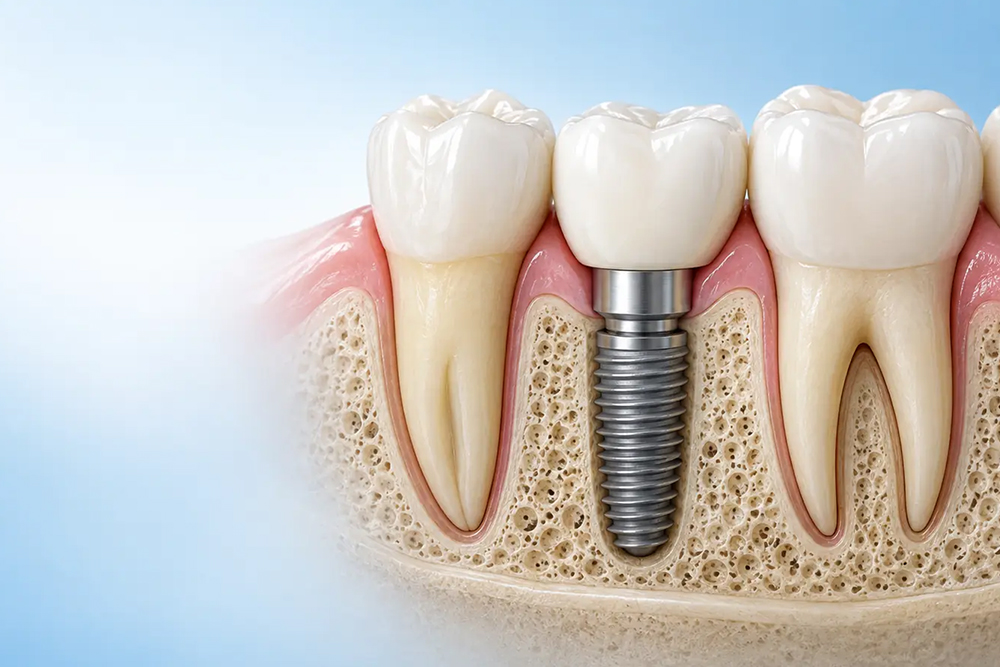
Before choosing dental implants, ask about your suitability, oral health, treatment options, likely steps, timing factors, costs, maintenance responsibilities, and alternatives. A good consultation should help you understand why an option is being recommended—not push you toward a decision before your teeth, gums, bite, health history, and goals have been assessed.
Dental implants in Kingston may be considered for one missing tooth, several missing teeth, or support for a larger tooth-replacement plan. They are not the right choice for every person or every situation. Bring a written question list so you can compare options based on your needs rather than on general claims.
Are Dental Implants the Right Option for Your Missing Tooth or Teeth?
Start by asking whether an implant is appropriate for the specific space, your oral health, and your priorities. The answer may depend on the condition of nearby teeth, gum health, available bone, the way your teeth meet, your medical history, medications, tobacco use, home-care ability, and whether you are prepared for ongoing maintenance.
Ask the dentist to explain both the benefits and limitations that apply to your case. A recommendation should include what information is still needed and what could change the plan. If a health concern, active dental problem, or another risk factor needs attention first, find out why and what alternatives exist.
It is also useful to define your goal. Are you replacing a tooth that is already missing, considering extraction of a damaged tooth, trying to stabilize a denture, or researching a full-arch option? Different goals can lead to different treatment discussions.
What Type of Implant Treatment Might Fit Your Needs?
Dental implant treatment is not one single procedure. The number and location of missing teeth, condition of the mouth, and type of final restoration all shape the plan.
Single-Tooth Implants
A single-tooth implant generally involves an implant supporting an individual replacement tooth. Ask how the space, neighbouring teeth, bite, and visible appearance affect the plan. Also ask what happens if the site is not ready for implant placement or if another replacement option would be more appropriate.
Implant-Supported Bridges or Dentures
When several teeth are missing, implants may be discussed as support for a bridge or denture. Ask how many implants are being considered, what the replacement will feel like, whether it is removable or fixed, how it will be cleaned, and which parts may need repair or replacement over time.
Full-Arch Options Such as Teeth In A Day
Full-arch treatment is a larger decision and should not be treated as a shortcut or assumed solution. Greenwood Park Dentistry provides information about Teeth In A Day in Kingston, but suitability, sequence, provisional teeth, final restoration, healing, and timing require an individual assessment. Ask exactly what the clinic means by the service name in your case.
What Should a Dentist Check Before Recommending Dental Implants?
Implant planning should begin with a thorough assessment.
Depending on the patient, a dentist may evaluate:
- The condition of the tooth or space being considered
- Gum health and whether active inflammation needs attention
- Bone quantity, quality, and anatomy at the proposed site
- The health and position of neighbouring teeth
- The bite and forces placed on the area
- Medical history, medications, allergies, healing considerations, and tobacco use
- Current restorations, dentures, or other appliances
- Home-care habits and ability to clean the proposed restoration
- Your goals, priorities, budget questions, and tolerance for a staged treatment process
Dental images, records, models, scans, or referrals may be recommended when clinically appropriate. Ask what each assessment is intended to show. Routine family and preventive dentistry can also matter before implant planning because untreated decay, gum concerns, or hygiene challenges may affect the broader plan.
What Are the Treatment Steps and Timeline?
Ask for a case-specific sequence rather than a generic timeline. Possible stages may include assessment, treatment of existing concerns, extraction if needed, site preparation, implant placement, healing, restoration design, and placement of the final tooth or prosthesis. Not every patient requires every stage, and some steps may occur in a different order.
Useful timing questions include:
- Which steps are expected in my case?
- Will any dental or gum treatment be needed first?
- What factors could delay or change the plan?
- Will I have a temporary replacement during any part of treatment?
- When will the dentist be able to judge whether healing is progressing as expected?
- Which appointments are estimates, and which can only be planned after the previous stage?
Avoid comparing your timeline with a friend’s or an advertisement. Healing and treatment complexity vary. Ask how the clinic will communicate changes if the original estimate no longer applies.
What Should You Ask About Cost, Maintenance, and Long-Term Care?
Request a written estimate that separates the parts of the proposed plan. Clarify whether the estimate includes assessment, imaging, extractions, grafting or site preparation if needed, the implant, connector components, provisional teeth, the final restoration, laboratory fees, and follow-up. The exact items will depend on your case.
If you have insurance, ask the office what documentation it can provide, then confirm coverage, limits, exclusions, waiting periods, and preauthorization requirements directly with your insurer. Do not assume that a proposed service is covered because it is clinically recommended.
Maintenance questions are equally important. Ask how to brush and clean around the restoration, whether special tools may be recommended, how often the implant and surrounding tissues should be assessed, and what signs should prompt an earlier visit. Learn which components may wear or need repair and what habits could place extra force on the restoration.
What Alternatives Should You Discuss?
A complete consultation should include reasonable alternatives, including the option of delaying treatment when clinically acceptable. Understanding the trade-offs helps you make an informed decision.
Dental Bridges
A dental bridge may replace a missing tooth using neighbouring teeth for support. Ask how those teeth would be prepared, how the bridge is cleaned, and why it may or may not be suitable for the space.
Partial or Full Dentures
Removable dentures can replace several or all missing teeth. Ask about fit, stability, cleaning, adaptation, repair, and how the appliance may affect eating and speaking. Implant support may be discussed in some cases, but it is not required for every denture plan.
Choosing Not to Replace the Tooth Immediately
In some situations, monitoring or delaying replacement may be an option; in others, leaving a space may affect function, appearance, tooth movement, or future choices. Ask what the dentist expects in your particular case and what follow-up would be needed.
Questions to Bring to a Dental Implant Consultation in Kingston
Use this checklist during your appointment:
- Am I a potential candidate for dental implants based on my oral and general health?
- Do my gums, bone support, bite, or neighbouring teeth need to be addressed first?
- Which tooth-replacement options should I compare, and why?
- What imaging or records do you need before making a recommendation?
- What are the likely steps in my case?
- What factors could affect treatment timing or healing?
- What risks, limitations, and maintenance responsibilities should I understand?
- What costs, estimates, and insurance questions should I clarify?
- What temporary or alternative options are available?
- Who will complete each part of treatment, and when might a referral be needed?
- What symptoms or changes should I report during treatment and afterward?
Take notes and ask for written information where available. If you do not understand a recommendation, ask the dentist to explain it another way before you decide.
Frequently Asked Questions About Dental Implants in Kingston
Are dental implants right for everyone?
No. Suitability depends on oral health, anatomy, medical history, medications, habits, goals, and the proposed restoration. A dental assessment is required before a recommendation can be made.
How do I know if I have enough bone for a dental implant?
A dentist must assess the site using clinical examination and appropriate imaging. If bone support is limited, the dentist can explain whether site preparation, a different implant plan, or another tooth-replacement option should be considered.
Are dental implants the same as Teeth In A Day?
No. A dental implant is a component used to support a replacement tooth or prosthesis. Teeth In A Day generally refers to a full-arch treatment concept. The exact process and suitability vary by clinic and patient.
What should I ask a dentist before starting implant treatment?
Ask about candidacy, assessments, alternatives, steps, timing factors, temporary teeth, risks, limitations, maintenance, costs, insurance documentation, and who will provide each stage of care.
Can a Kingston dentist explain tooth replacement options?
Yes. A general dentist can assess your mouth and discuss options within the clinic’s scope, then explain when referral or additional consultation may be appropriate.
Talk to Greenwood Park Dentistry About Dental Implants in Kingston
Choosing tooth replacement is easier when you understand the questions behind the recommendation. Greenwood Park Dentistry can assess your oral health, listen to your goals, and explain which options may be appropriate without assuming that implants are the answer for everyone.
To discuss dental implants or alternatives, contact Greenwood Park Dentistry. Bring your health information and question list so the consultation can focus on suitability, choices, responsibilities, and realistic next steps for your case.